
Spinal decompression · Bibra Lake, southern Perth
Spinal decompression in Bibra Lake for sciatica, disc pain & migraines
- Non-surgical & drug-free
- Lower back & neck
- Health funds on the spot
Last updated
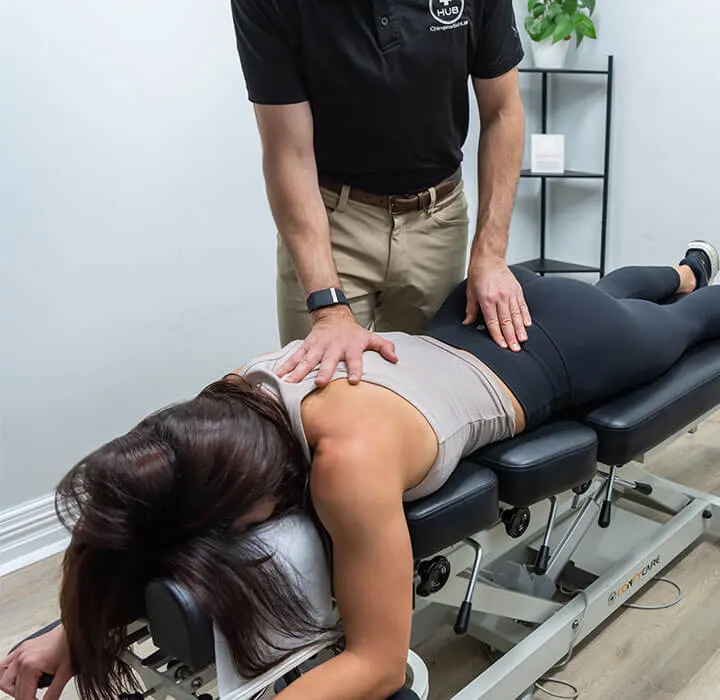

AHPRA-registered chiropractors
12+ years of chiropractic experience
When pain comes down to pressure
A lot of stubborn back, leg and neck pain traces back to one word: pressure. Discs and joints that are loaded and compressed day after day can irritate the nerves around them. In the lower back that can show up as sciatica, a hot wire down one leg. In the neck it can show up as pain into the shoulder or arm, or as headaches that start at the base of the skull.
How decompression works
You lie comfortably on the decompression table, fully clothed. The table gently and gradually stretches your spine, holds, then eases off, in a slow rhythm. That controlled stretch aims to create space between the vertebrae and ease pressure on the discs, joints and nerves, which may help reduce pain and get you moving again.
Decompression isn’t a stand-alone gimmick. It sits alongside hands-on chiropractic care, soft-tissue work and simple things you can do at home, so your plan targets what is actually driving your pain.
What we assess it for
Where decompression may help
Sciatica & leg pain
Pressure around the nerve roots in the lower back is a common driver of stubborn sciatic-type pain.
- Pain shooting into the buttock or leg
- Burning or electric pain down the thigh
- Pins and needles in the calf or foot
- Leg pain worse sitting or bending
- Disc-related nerve irritation
- Sciatica that keeps coming back

Decompression may help. Your assessment decides whether it suits you.
Disc & lower back pain
When the discs and joints of the lower back are loaded and compressed, gently creating space may help.
- Disc bulges
- Disc-related lower back pain
- Degenerative disc changes
- Facet joint compression
- Lower back pain that keeps returning
- Pain worse after long periods of sitting
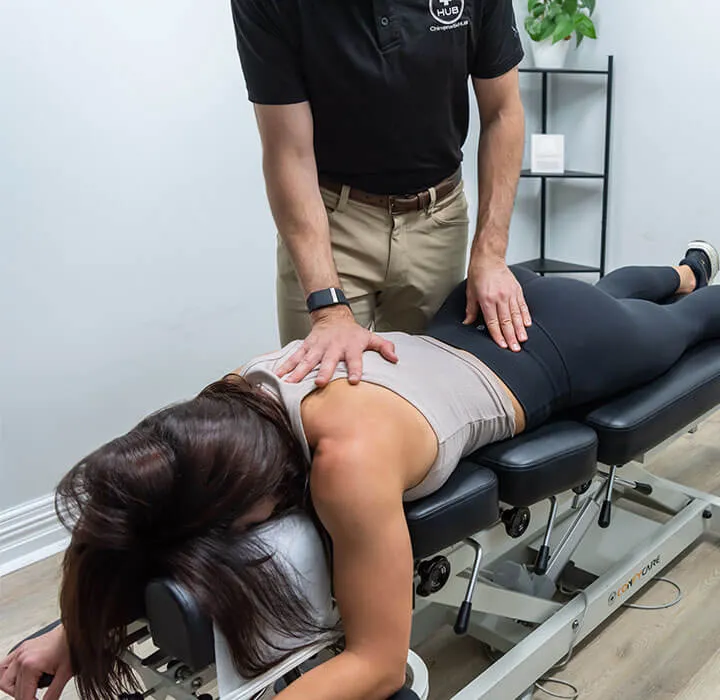
Decompression may help. Your assessment decides whether it suits you.
Neck pain, headaches & migraines
Many headaches start in the neck. Where they do, easing compression in the neck may be part of your care.
- Headaches starting at the base of the skull
- Migraines with neck stiffness or tension
- Neck pain spreading into the shoulder or arm
- Pins and needles into the hand
- Disc-related neck pain
- Stiffness from desk and phone posture
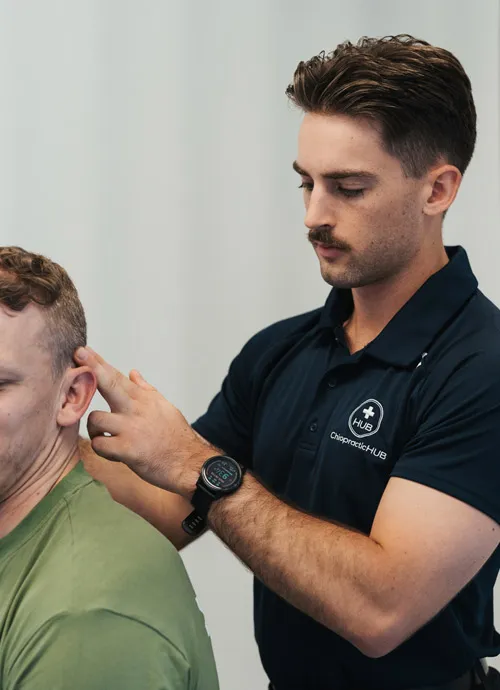
Decompression may help. Your assessment decides whether it suits you.
Alongside your GP, never instead.
We work with your medical care for migraines.
Headaches & migraines
Decompression for neck-related headaches and migraines
The top joints of your neck share nerve pathways with the back and side of your head. When the neck is stiff and compressed, from desk work, phones, driving or an old injury, that pressure can be felt as a headache rather than neck pain.
If you get migraines, there is often a neck component too: tightness at the base of the skull, reduced neck turning, or headaches that build through the day. Where your assessment shows that, gentle neck decompression, upper-neck adjustments and soft-tissue release may help ease that part of the load.
Migraine itself is a neurological condition, so it should be diagnosed and managed with your GP or neurologist. We’ll tell you honestly what we think is coming from your neck and what isn’t.
What to expect
Answers first, then a gentle stretch
Assess first
Your Neck & Spine Assessment checks your spine, nerves and history to find out whether decompression is likely to suit you.
Decide together
We explain what we found and what we recommend in plain English. No pressure, no scare campaigns.
A gentle stretch
You lie fully clothed on the table while it slowly stretches and relaxes your spine. Most people find it comfortable.
Review progress
Decompression sits alongside hands-on chiropractic care, and we check how you are responding as we go.
Is it right for me?
Who we often assess for decompression
- Sciatica or leg pain that hasn’t settled
- Disc-related lower back or neck pain
- Pain that returns despite rest and stretching
- Headaches or migraines with a neck component
- Pain worse after sitting, driving or desk work
- People wanting a non-surgical option to discuss
Some cases suit decompression and some don’t. Your assessment tells us which, and if it doesn’t fit, we’ll say so and talk you through other options. Decompression is available to people from Bibra Lake, Spearwood, Hamilton Hill and across the City of Cockburn.
Important
When decompression isn’t suitable
Decompression is generally not used with:
- Pregnancy
- Spinal fractures
- Significant osteoporosis
- Spinal tumours or infection
- Some spinal surgery or implants
Call 000 or go to an emergency department for loss of bladder or bowel control, numbness around the groin, or rapidly worsening leg weakness, or for a sudden, severe “worst ever” headache.
Not sure? Call 0483 989 154FAQs
Spinal decompression questions
What is spinal decompression?
Spinal decompression uses a specialised table to gently and gradually stretch the spine, creating space where things are compressed. It is non-surgical and drug-free. At ChiropracticHUB in Bibra Lake it is one of the tools our chiropractors may use for stubborn sciatica, disc-related lower back pain and some neck-related pain and headaches, where your assessment shows it suits you.
Can spinal decompression help sciatica?
A lot of stubborn sciatic-type pain traces back to pressure around the nerve, for example from a disc bulge or narrowing in the lower back. Decompression aims to ease that pressure, and for some people it may help reduce leg and lower back pain. Not every case of sciatica suits it, so we use nerve tension tests and a full spinal exam to work out whether it is likely to suit yours.
Can spinal decompression help migraines or headaches?
Some headaches start in the neck (cervicogenic headaches), and some people with migraine also have neck stiffness or compression that adds to their headaches. Where your assessment shows a neck component, gentle neck decompression may be part of your care. Migraine itself is a neurological condition, so we always work alongside your GP or neurologist, not instead of them.
Does spinal decompression hurt?
Most people find it comfortable. You lie fully clothed on the table and feel a slow, gentle stretch that builds gradually and then eases off. Many patients find it relaxing. If anything feels uncomfortable, tell us and we adjust it straight away.
How many decompression sessions will I need?
It depends on what is driving your pain and how long you have had it. Decompression is usually given as a course of sessions alongside hands-on chiropractic care, and we review your progress as we go. After your assessment we explain what we recommend and why, so you can decide with all the information.
Who should not have spinal decompression?
Decompression is not suitable for everyone. It is generally not used during pregnancy, or for people with spinal fractures, significant osteoporosis, spinal tumours or infection, or some types of spinal surgery or implants. That is why every new patient starts with a full assessment. If decompression is not right for you, we will say so and discuss other options or refer you on.
How much does spinal decompression cost in Bibra Lake?
Every new patient starts with a $69 Neck & Spine Assessment of up to 45 minutes, which tells us whether decompression is likely to suit you. No referral is needed and most private health funds can be claimed on the spot. Call 0483 989 154 for current treatment fees.
Where can I get spinal decompression in Perth’s southern suburbs?
ChiropracticHUB offers non-surgical spinal decompression at 23 Port Kembla Drive, Bibra Lake WA 6163, inside Roar Fitness with free parking. It is a short drive for people across the City of Cockburn and southern Perth, including Spearwood, Hamilton Hill, Coogee, South Lake, Cockburn Central, Fremantle and Murdoch. Book a $69 Neck & Spine Assessment online or call 0483 989 154.
Keep exploring